
Most compaction workflows assume the feedback shows up in time to change something. Density gets measured. Results get reviewed. Lessons get learned.
By the time that feedback reaches you, the chance to influence the mat is usually gone. The rollers have moved on, the mat has cooled, and the crew is setting up the next pull before anyone looks at the numbers in detail. At that point the outcome is not adjustable. It is just documented.
the moment that actually matters
Asphalt compaction runs on a clock. As the mat cools, it stops moving, and your ability to hit target density drops with it. Industry guidance and research both back this up. It is not in dispute.
So the real question is not whether you can measure density accurately. It is whether the information reaches you while the mat is still compactable. Once temperature drops below the effective range for the mix, more rolling buys you nothing and can start to damage the surface or cause segregation.
the assumption that breaks
Most QC workflows are built around verification, not intervention. They answer:
- Did the section hit target density?
- Did it meet spec?
- Can you document it and defend it?
Good questions, but every one of them looks backward. They assume that learning after the fact is enough to fix the next pass, the next pull, or the next job. That falls apart when conditions change in minutes, not days.
the window is short, and it is local
You make the compaction decisions that matter while:
- The mat is still in a workable temperature range.
- The rollers are still on the section.
- You can still change pattern, speed, or coverage and see it move the result.
That window is measured in minutes. Feedback that arrives after it closes may be perfectly accurate and still worthless for that section.
why it costs you
When the feedback shows up late:
- Density variability only becomes visible after it is locked in.
- The pay factor is decided before anyone reviews it.
- Rework and disputes turn into paperwork instead of a fix on the mat.
None of that means poor workmanship or weak effort. It is a timing mismatch. Decisions get made in one moment, information arrives in another.
this is not a measurement problem. it is a timing problem.
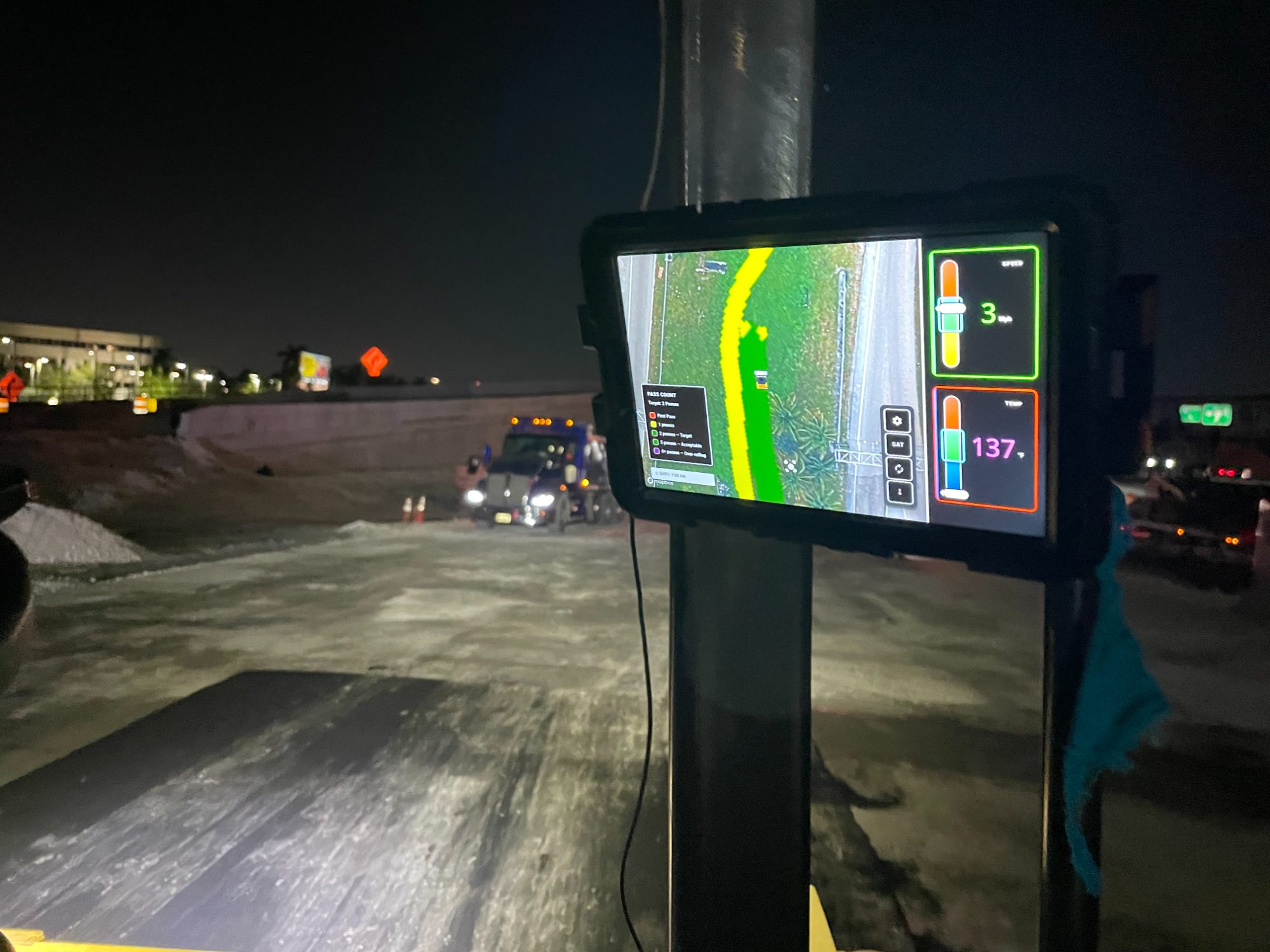
Better outcomes come from putting the information in front of the operator while the crew can still act, while the mat is still hot and the decision still matters. That is the whole point of real-time guidance: Green = Done, on the pass that counts, so you protect the Unit Price Adjustment for density instead of explaining it away three weeks later.
So ask yourself: when does your compaction information arrive, relative to when the decisions actually get made on the mat?
references
- Asphalt Institute. MS-22: Construction of Hot Mix Asphalt Pavements.
- Federal Highway Administration (FHWA). Intelligent Compaction: A Practical Guide for Asphalt Pavements (FHWA-HIF-19-050).
- NAPA. Best Practices for Intelligent Compaction.
- TRB. Temperature Effects on Asphalt Compaction and Density Development.